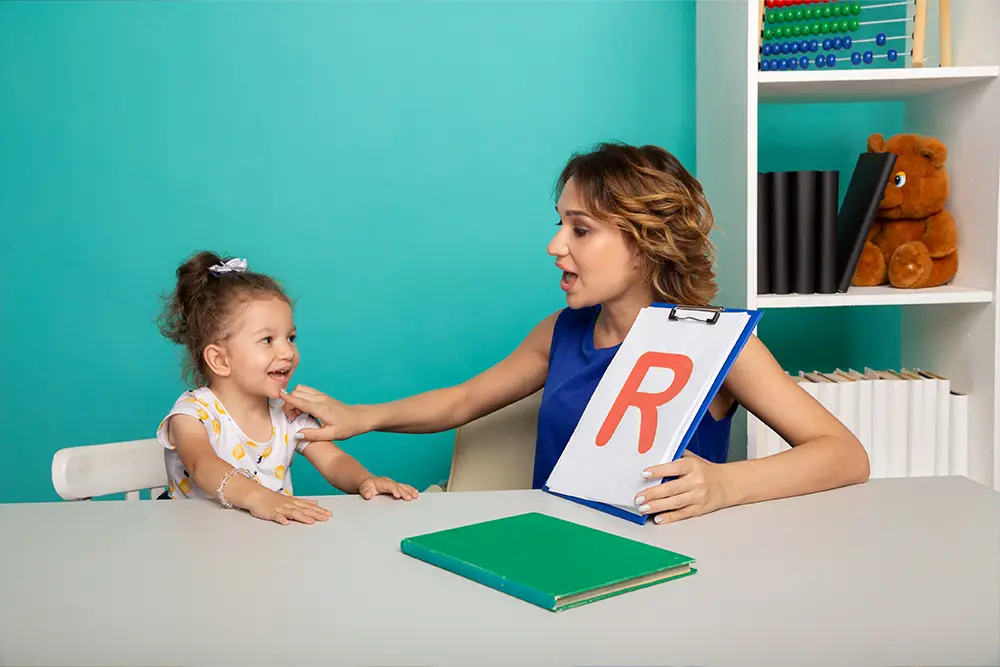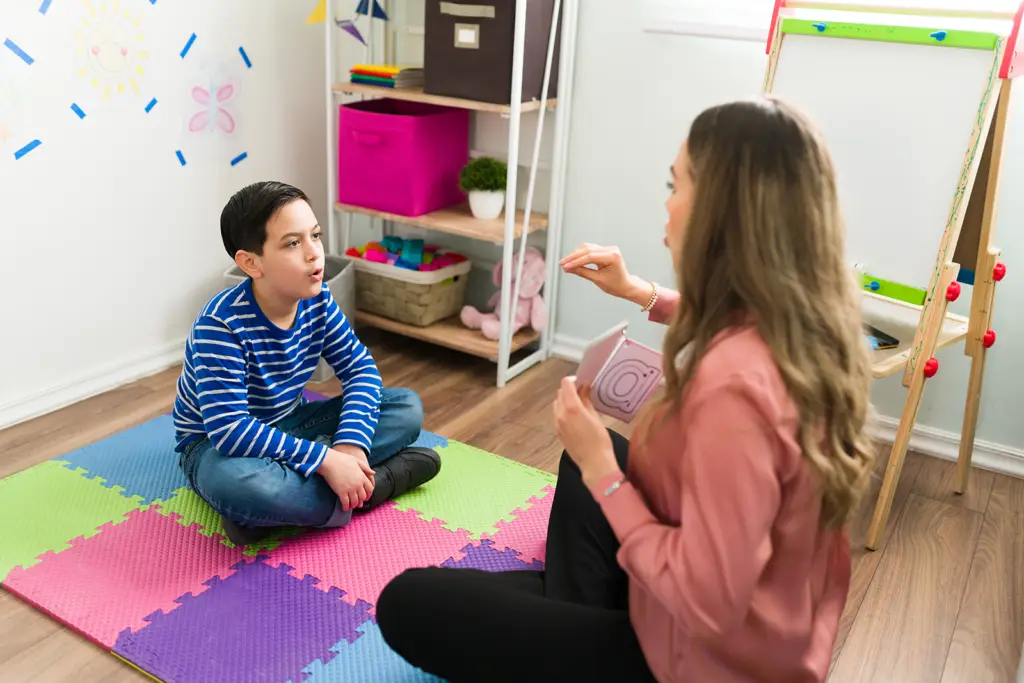
One of the most empowering things you can learn as a parent is that you do not need special equipment, flashcards, or a therapy room to support your child’s speech and language development. The most powerful language-building opportunities happen naturally throughout your daily routines—during meals, bath time, car rides, and play.
As a pediatric speech-language pathologist in Sugar Land, TX, I work with families every day to identify simple, practical strategies they can use to promote communication growth at home. Here are five of my favorites.
1. Follow Your Child’s Lead
One of the most effective ways to encourage language is to pay attention to what your child is already interested in and talk about it. If they are stacking blocks, narrate what they are doing: “You are stacking the blocks. Stack, stack, stack. It is so tall!” When you follow your child’s interests, they are more motivated to listen, engage, and communicate.
2. Narrate Your Routines
Everyday activities are rich language learning opportunities. As you go through your day, talk about what you are doing in simple, clear language. During meals: “Time to eat. Here is your spoon. Scoop the yogurt. Yum!” During bath time: “Let’s wash your hands. Rub, rub, rub. Now your tummy.” This kind of routine-based narration exposes your child to a wide vocabulary and helps them connect words to real-world actions and objects.
3. Expand on What Your Child Says
When your child communicates—whether with a word, a gesture, or a sound—build on it. If your child says “car,” you might respond with “Yes, a red car! The car is fast.” This technique, called expansion, models more complex language without putting pressure on your child to repeat it. Over time, children naturally absorb and begin to use these expanded forms on their own.
4. Read Together Every Day
Shared reading is one of the single most beneficial activities for language development—and it does not have to look like a quiet, cover-to-cover reading session. With young children, it is perfectly fine to just talk about the pictures, ask questions, make silly sound effects, and let your child turn the pages. The goal is interaction and engagement, not perfection. Choose books with repetitive phrases, colorful illustrations, and topics your child loves.
5. Give Your Child Time to Respond
One of the most common things I see in parent-child interactions is a pace that is just a little too fast for the child to participate. After you ask a question or make a comment, pause and wait. Count to five silently. Give your child the time and space to process, formulate, and produce their response. You may be surprised at how much more your child communicates when they are given those extra seconds.
These five strategies are simple, free, and incredibly powerful. And the best part is that you can start using them today, right in your own home.
If you would like more personalized guidance on how to support your child’s communication development, Gabsolutely Speaking Speech Therapy offers parent coaching and caregiver education services in Sugar Land, TX. We would love to help you become your child’s most effective communication partner.